Vickery Village


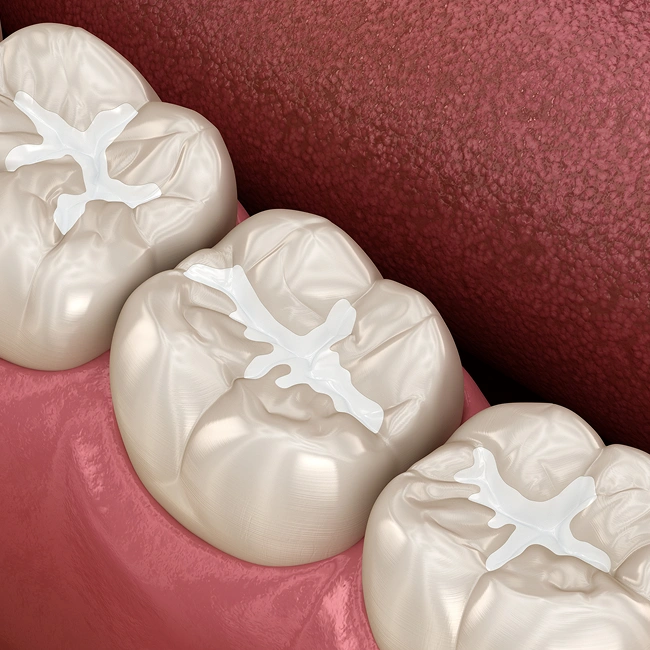
Protecting Teeth with Dental Sealants
Teeth with deep grooves and pits can be difficult to clean thoroughly, even with consistent brushing. When these narrow areas cannot be adequately reached by toothbrush bristles, plaque can accumulate and increase the risk of decay. Dental sealants provide an added layer of protection by sealing vulnerable tooth surfaces, helping maintain long-term oral health and prevent cavities before they start.
Sealants are commonly recommended for children and adolescents and may also be appropriate for some adults based on tooth anatomy and cavity risk. When recommended maintenance is followed, sealants are monitored during routine recall visits and touched up as needed.
Schedule a Sealant Consultation
What Are Dental Sealants
Dental sealants are thin, protective coatings applied to the chewing surfaces of teeth, most commonly molars and premolars. Once applied, sealants bond to the enamel and act as a barrier against plaque, bacteria, and food particles. Sealants are durable, effective, and designed to withstand normal chewing forces while protecting teeth that are most prone to decay.
What to Expect During a Dental Sealant Procedure
The grooves of the teeth are first cleaned using a polishing paste. An acidic gel (etch) is then applied to gently roughen the enamel surface to help the sealant bond securely. The sealant material is painted over the grooves, and a curing light is used to harden the material. The teeth are then rinsed and dried.
Anesthetic is not needed, as the procedure involves bonding only to the enamel and is completely painless.
Long-Term Protection with Dental Sealants
Dental sealants are an effective preventive solution for protecting teeth that are more susceptible to decay. When combined with regular dental visits and proper home care, sealants help maintain strong, healthy teeth for years to come.
Request a Dental Sealant Evaluation
Benefits of Dental Sealants
Dental sealants offer several advantages for long-term tooth protection, including:
Protecting deep grooves and pits from cavity formation
Creating smoother tooth surfaces that are easier to clean
Reducing the risk of tooth decay in hard-to-reach areas
Providing long-lasting protection with minimal maintenance
Offering a quick, non-invasive preventive treatment
FAQs About Sealants
Who is a good candidate for dental sealants?
Sealants are commonly recommended for children and teenagers and may also be appropriate for adults with deep grooves or a higher risk of cavities.
How long do dental sealants last?
Sealants can last several years and are evaluated during routine dental visits. Touch-ups may be performed if wear is noted.
Are dental sealants visible?
Sealants are clear or tooth-colored and blend naturally with the teeth.
Do sealants replace brushing and flossing?
No. Sealants are an added layer of protection and should be used alongside proper brushing, flossing, and regular dental visits.
Is the sealant procedure painful?
No. The procedure is quick, non-invasive, and does not require anesthesia.
Can sealants prevent all cavities?
Sealants significantly reduce the risk of decay on treated surfaces but work best when combined with good oral hygiene and preventive care.